
Labrum: London Fashion Week Spring Summer 2027
 Karine Laudort
This season, Foday Dumbuya brought LABRUM’s Osmosis trilogy to a close with Hands of Osmosis, a collection about craft, migration, and the hands that carry cultural memory from one generation to the next. Staged once again in the grand hall at One Great George Street, it is one of the brand’s most considered creative explorations to date.
Across three collections, Dumbuya has used the idea of Osmosis to examine how culture travels: through sound, through textiles and, finally, through craft.
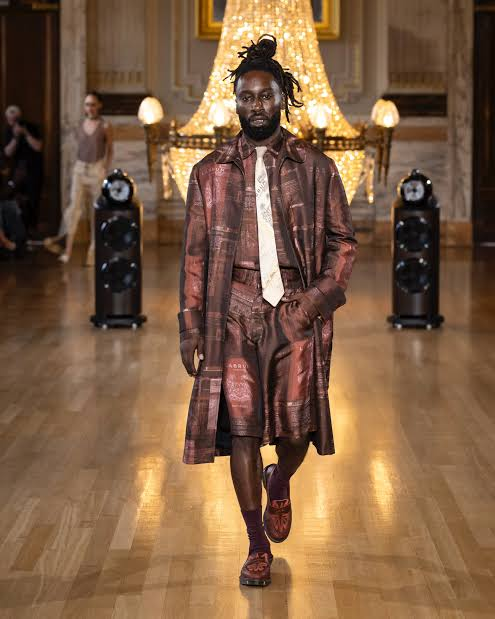
Hands of Osmosis completes the trilogy by turning its attention to the people behind the objects, the makers, artisans and craftspeople whose hands allow knowledge to cross borders and generations.
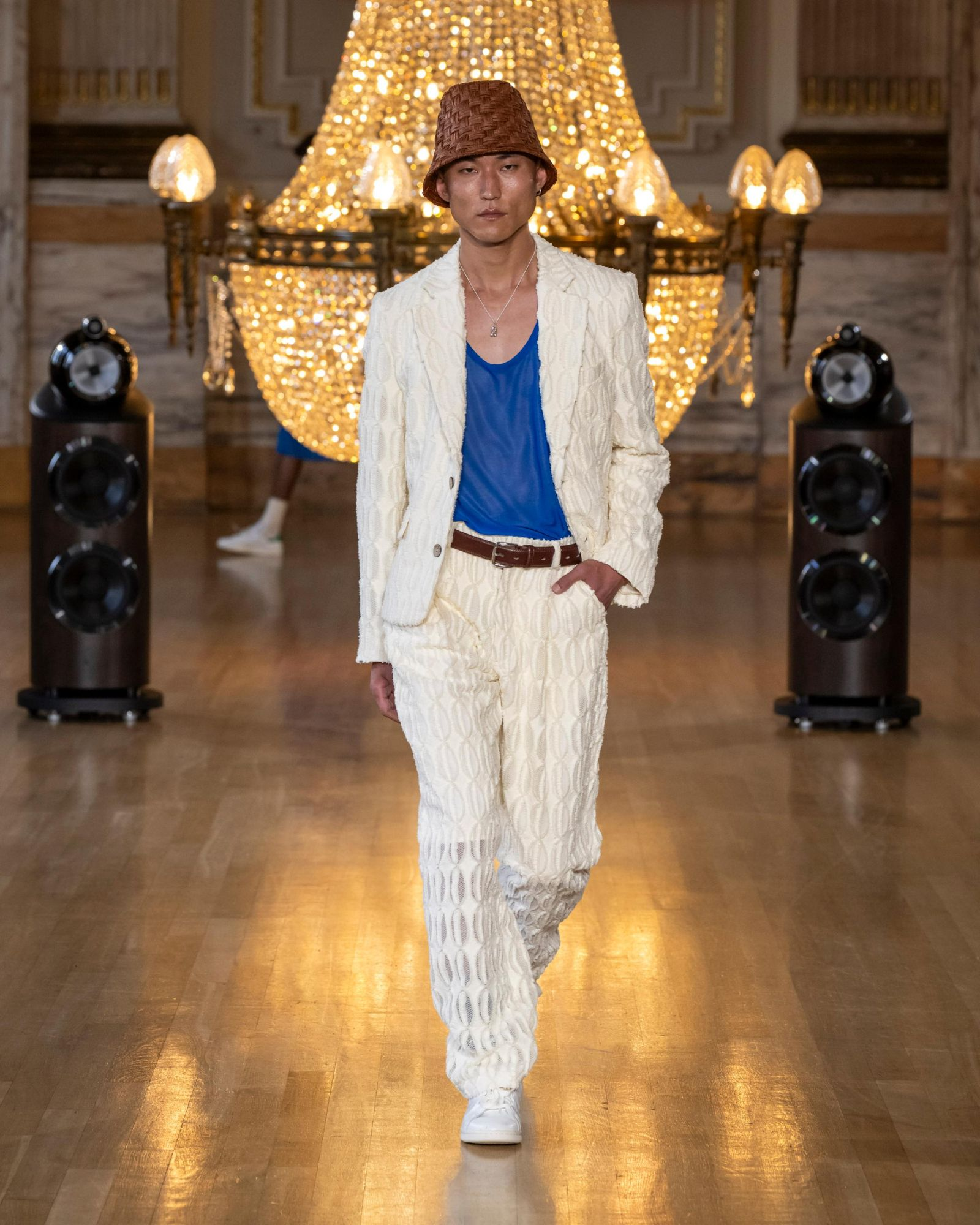
It is an idea that feels natural for LABRUM. Founded by Sierra Leonean-born, London-raised designer Foday Dumbuya, the brand has long occupied the space between West African heritage and British tailoring, questioning the idea that culture belongs neatly to one place.
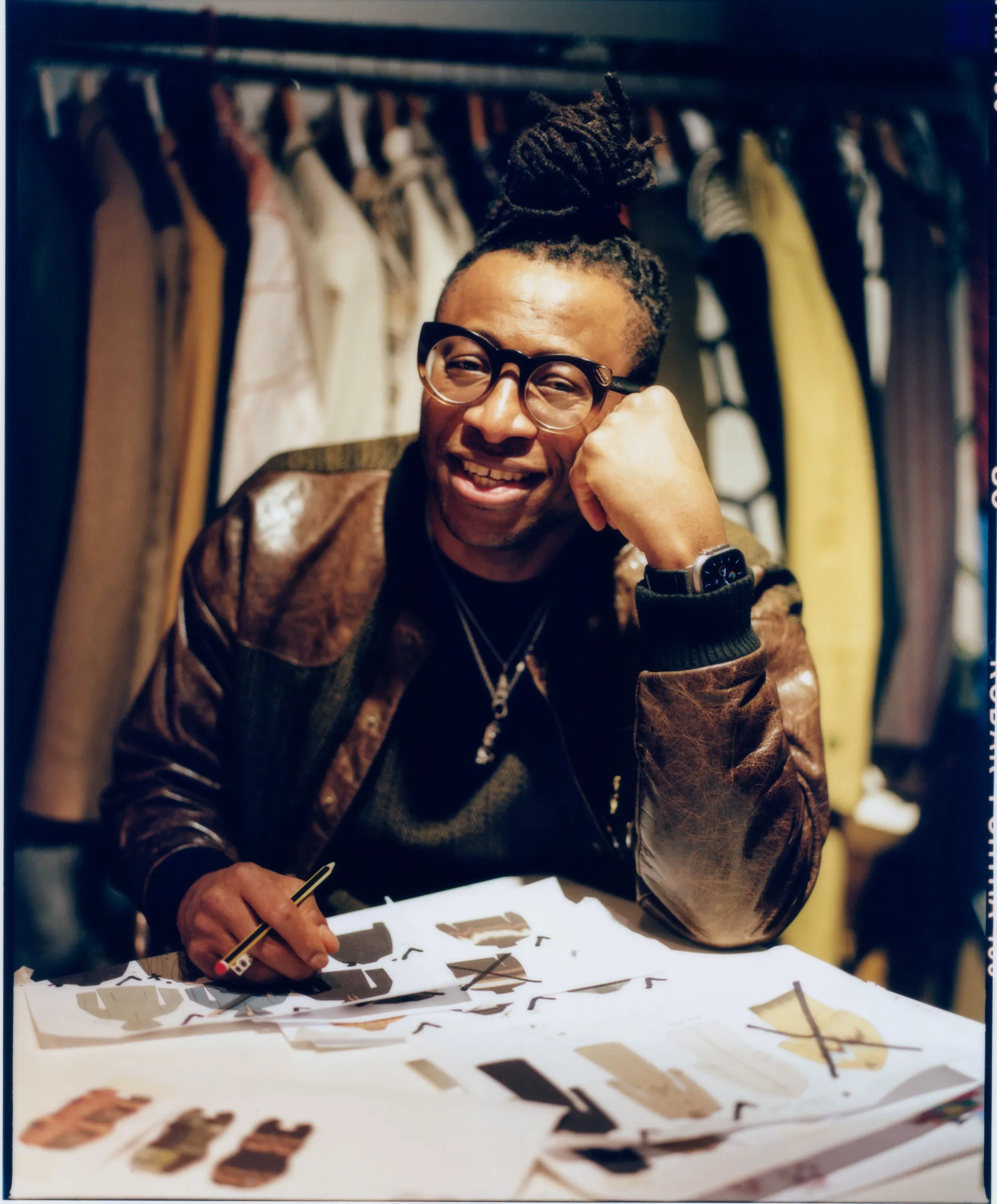
The hands behind the story
The starting point is the relationship between West Africa and Britain, but the collection widens the dialogue to include India, building a broader story about how craft techniques travel, adapt and acquire new meaning.
Weaving, embroidery, lleatherworkand beading become the vocabulary through which LABRUM explores migration. The collection suggests that cultural continuity doesn’t necessarily mean making something exactly as it was made before. Sometimes it means carrying the knowledge forward and allowing another pair of hands to reinterpret it, a philosophy visible throughout the clothes.
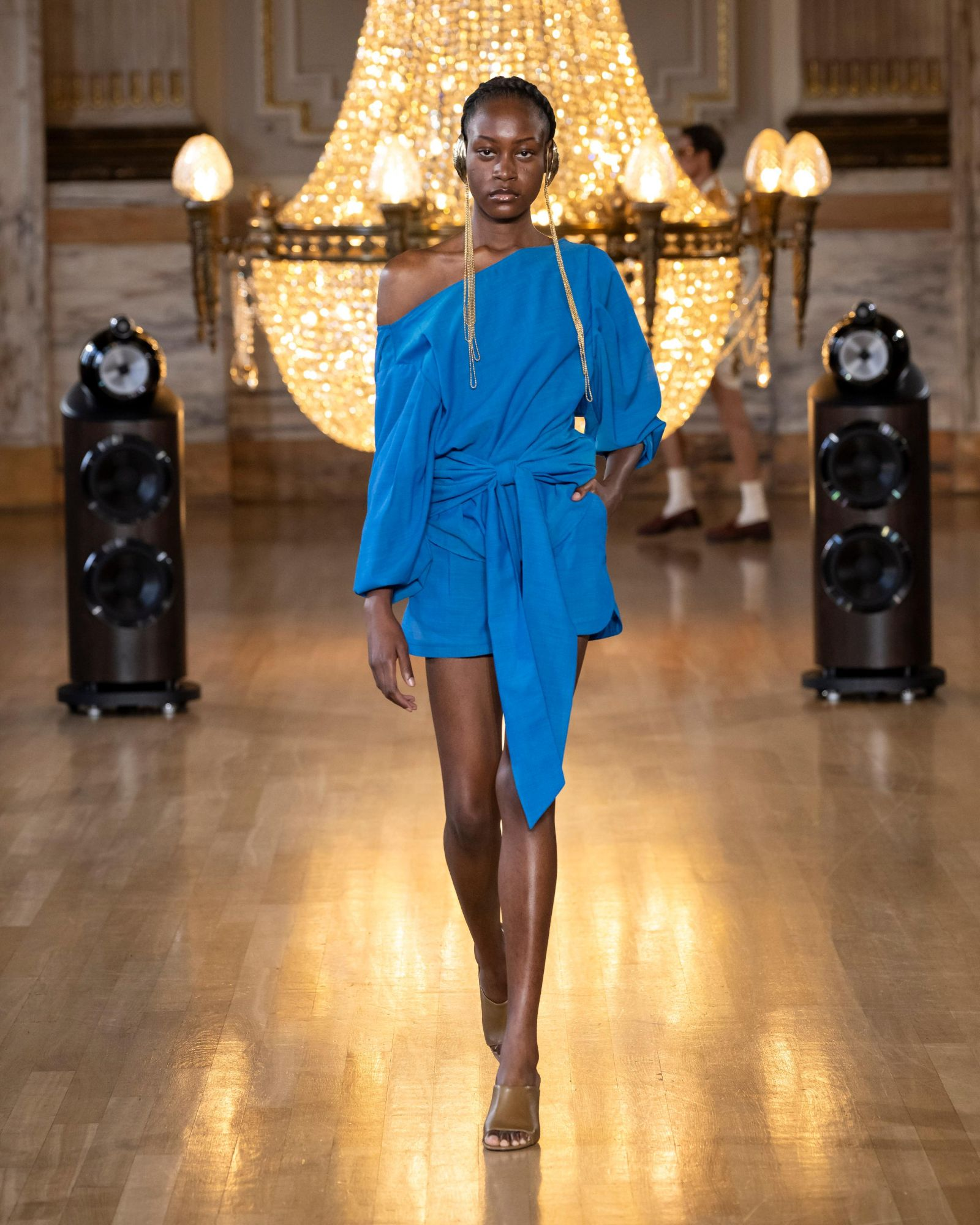
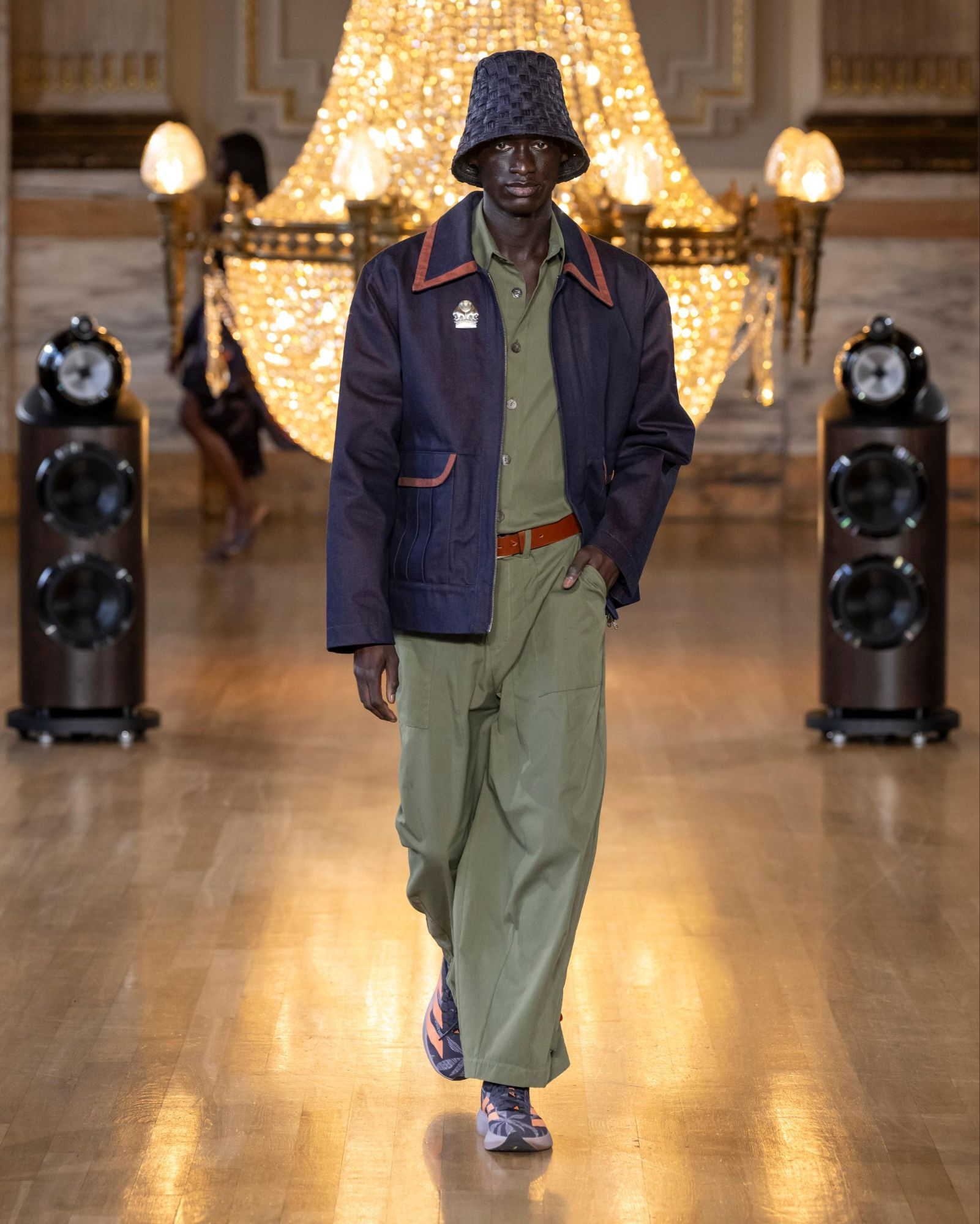
From Sierra Leone to India…then back to London
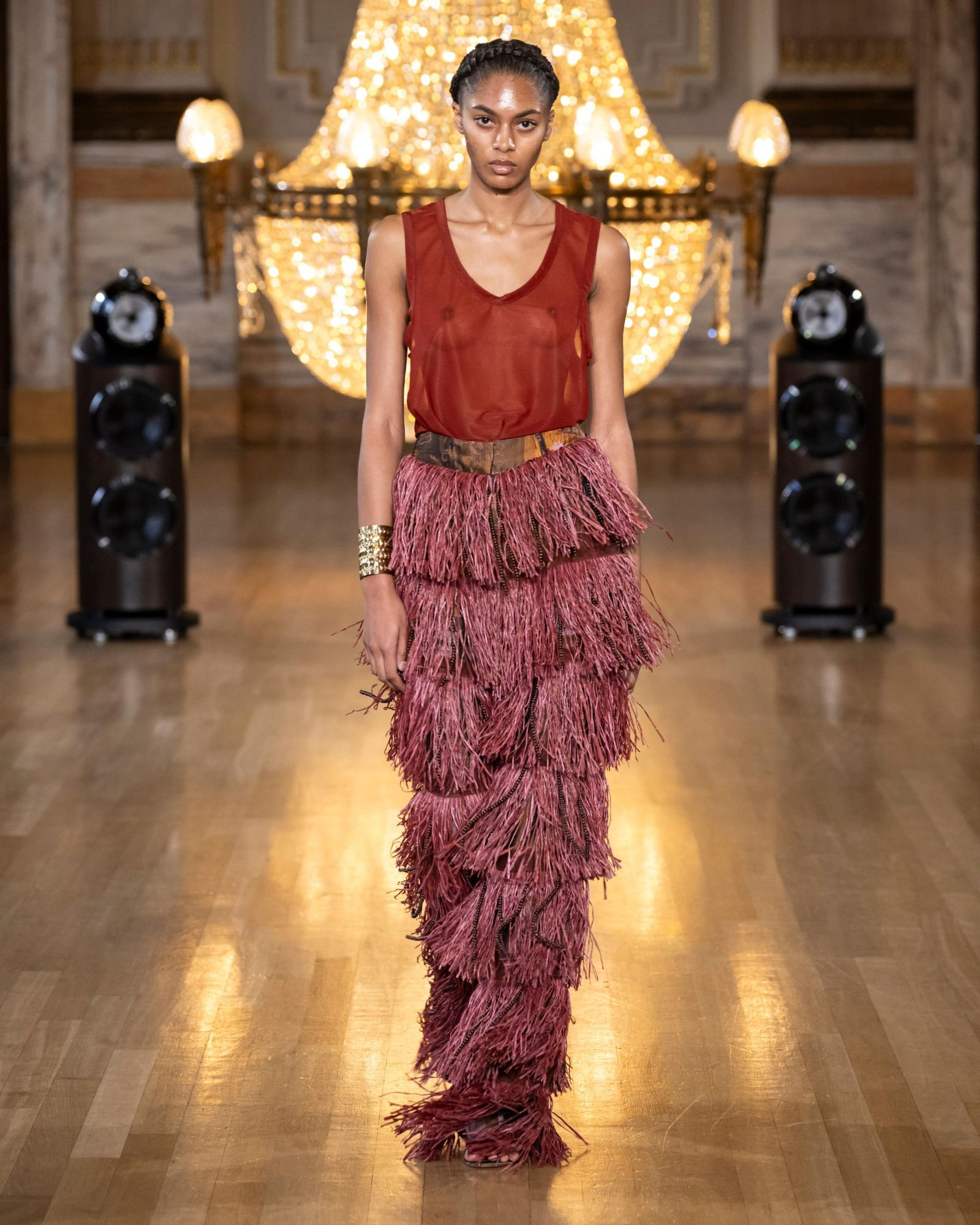
Nowhere is this clearer than in the handcrafted raffia trousers produced in India, inspired by the Goboi masquerade tradition of the Mende people. The raffia and bead work echo the movement of the traditional dance, bringing together material, motion and cultural symbolism.
They also make the collection’s larger point: the story doesn’t stay in one place. A Sierra Leonean reference can be interpreted by makers in India and presented on a London runway, and the journey itself becomes part of the design.
LABRUM extends the idea through its collaboration with British milliner Lucy Barlow, who reinterprets West African woven head wear techniques through the language of British millinery. Sculpted leather bags take their cues from the forms of West African ceramics and woodcarving, translating familiar craft traditions into contemporary accessories. The result is almost a map of movement, not just of people, but of techniques, materials and knowledge.
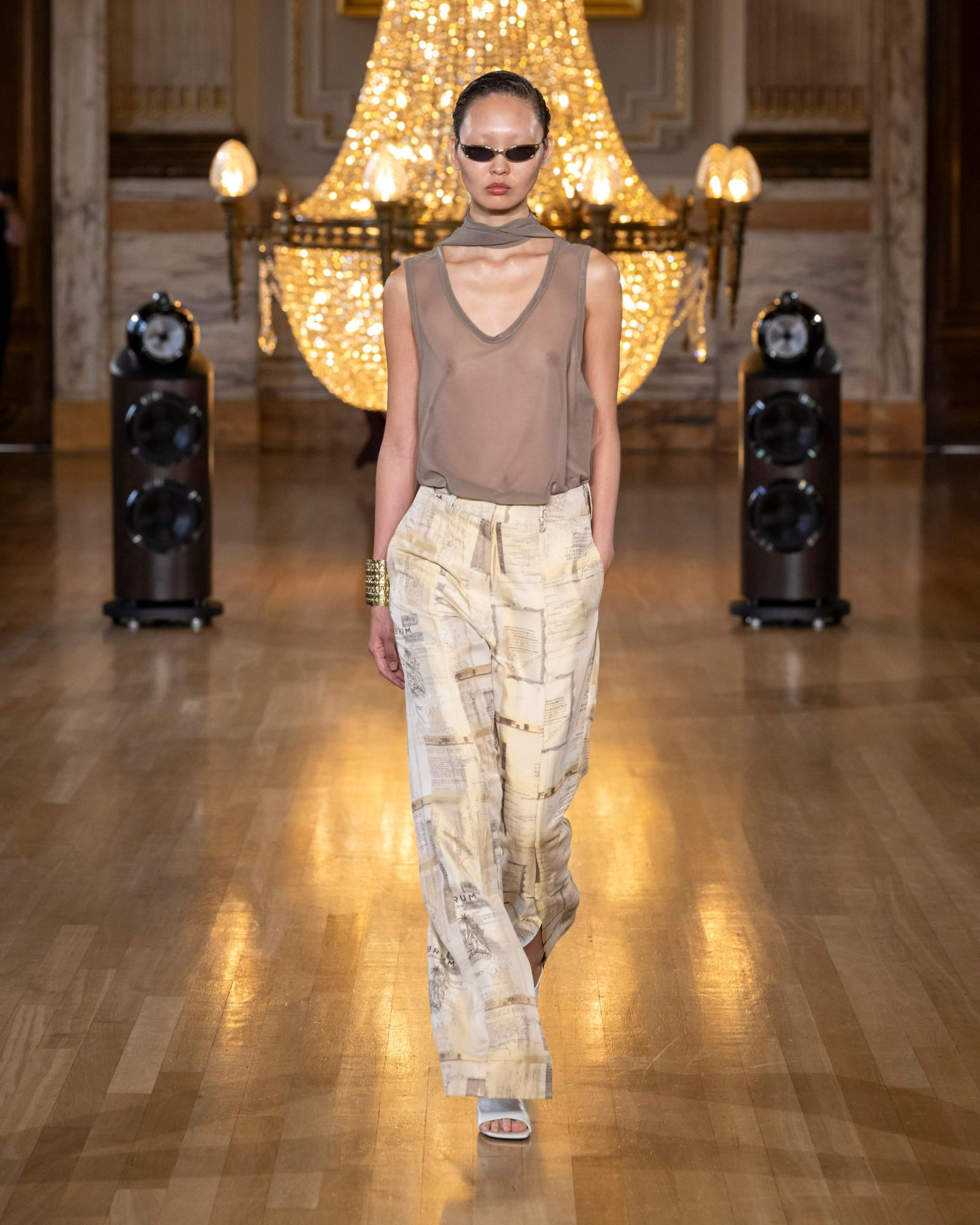
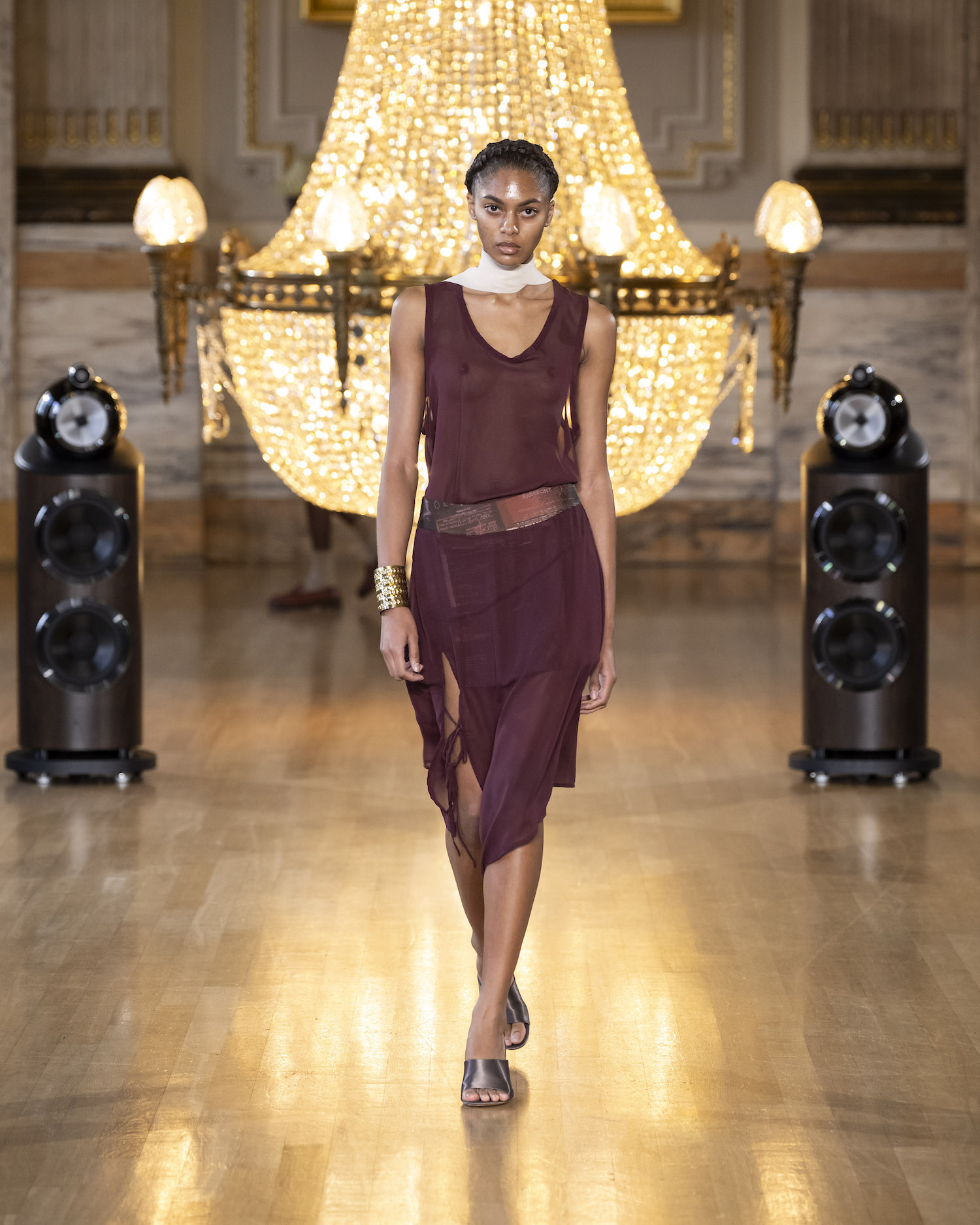
That idea of travel runs right through the details. LABRUM’s signature passport motif made a return, built from dates and destinations in Dumbuya’s own family passports, while a geometric motif across white fil coupé referenced Olokun, the Yoruba deity of the sea.
The story of ‘Mamie Bakie’
The most personal element is the ‘Mamie Bakie’ series of hand-embroidered garments. It draws on memories of Dumbuya’s grandmother, who worked at a market stall in Sierra Leone. The embroidery becomes a tribute to everyday labour, and to the women whose work sustained communities without necessarily entering the formal historical record.
This isn’t heritage as an abstract concept. It is about real people, mothers, grandmothers, makers, sellers and craftspeople, whose knowledge lives on through what they teach and make.
A new chapter for LABRUM eyewear
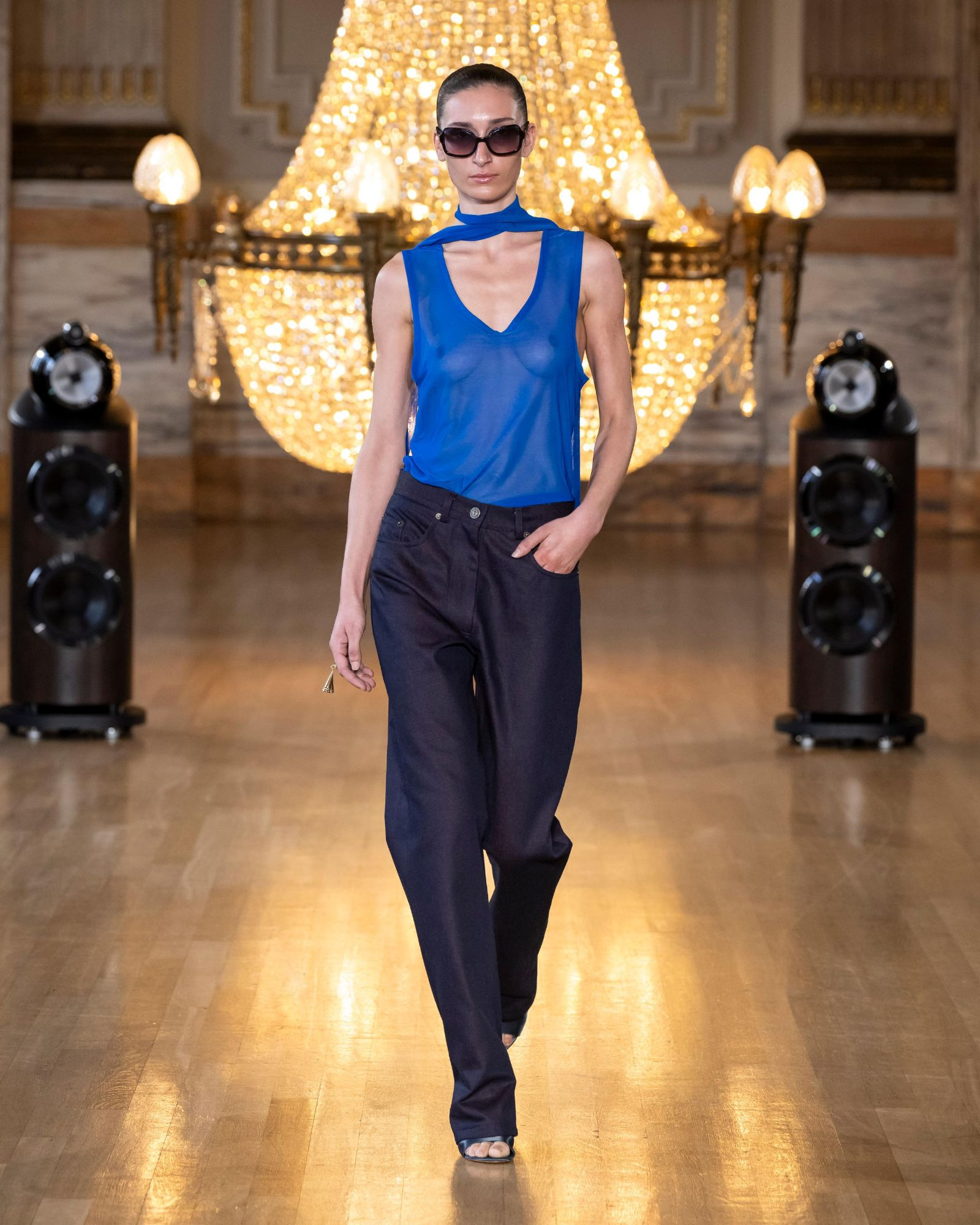
SS27 also marks LABRUM’s move into eyewear, with bold acetate and metal frames inspired by the expressive style of 1970s West African icons. The eyewear doesn’t feel like an unrelated extension of the brand. Its sculptural forms and strong proportions sit comfortably within the collection’s wider visual language, while the signature Nomoli detailing brings another reference from LABRUM’s British-West African vocabulary. It is another example of Dumbuya’s ability to take historical and cultural references and place them firmly within a contemporary wardrobe.
Jacob Lawrence and the colour story
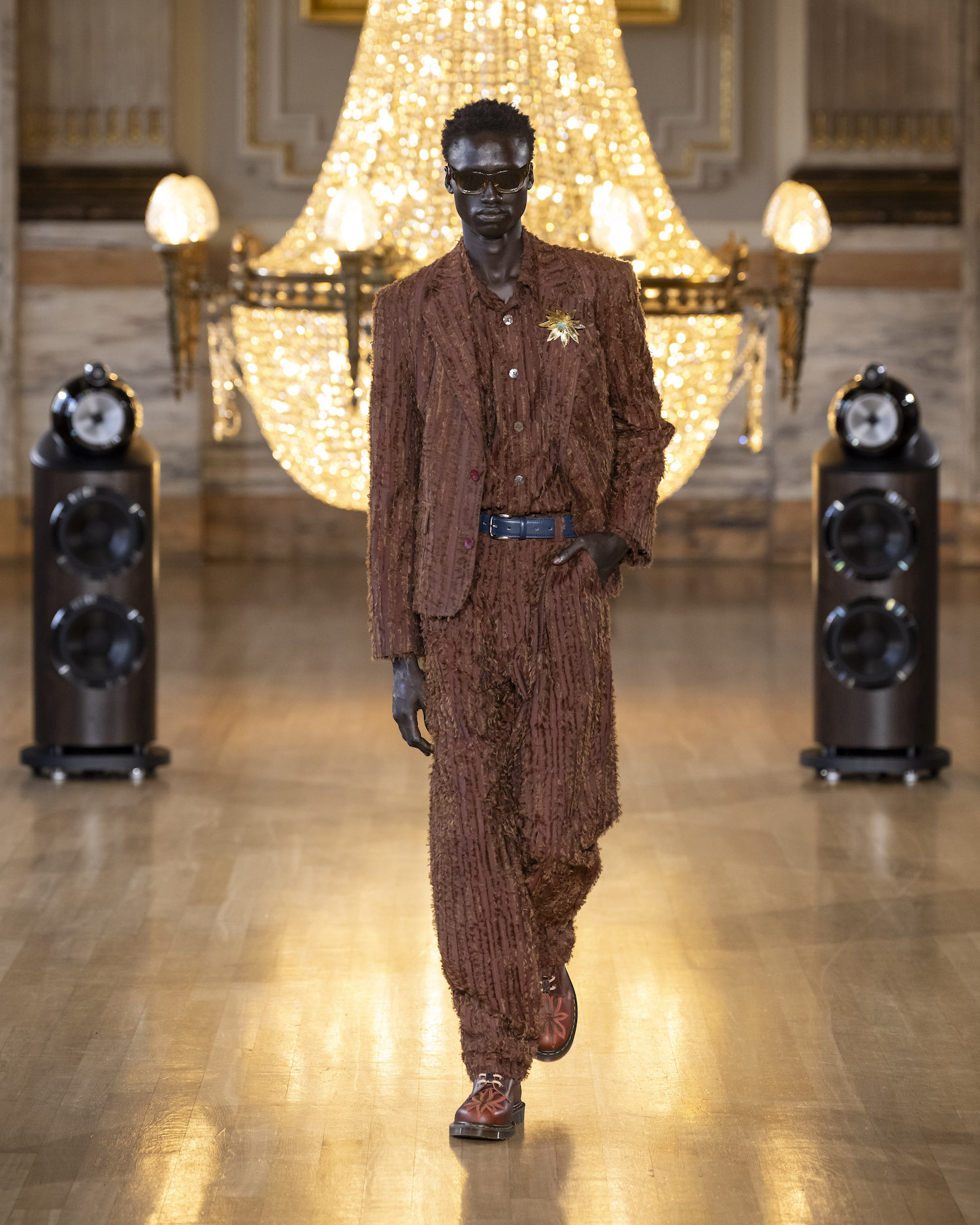
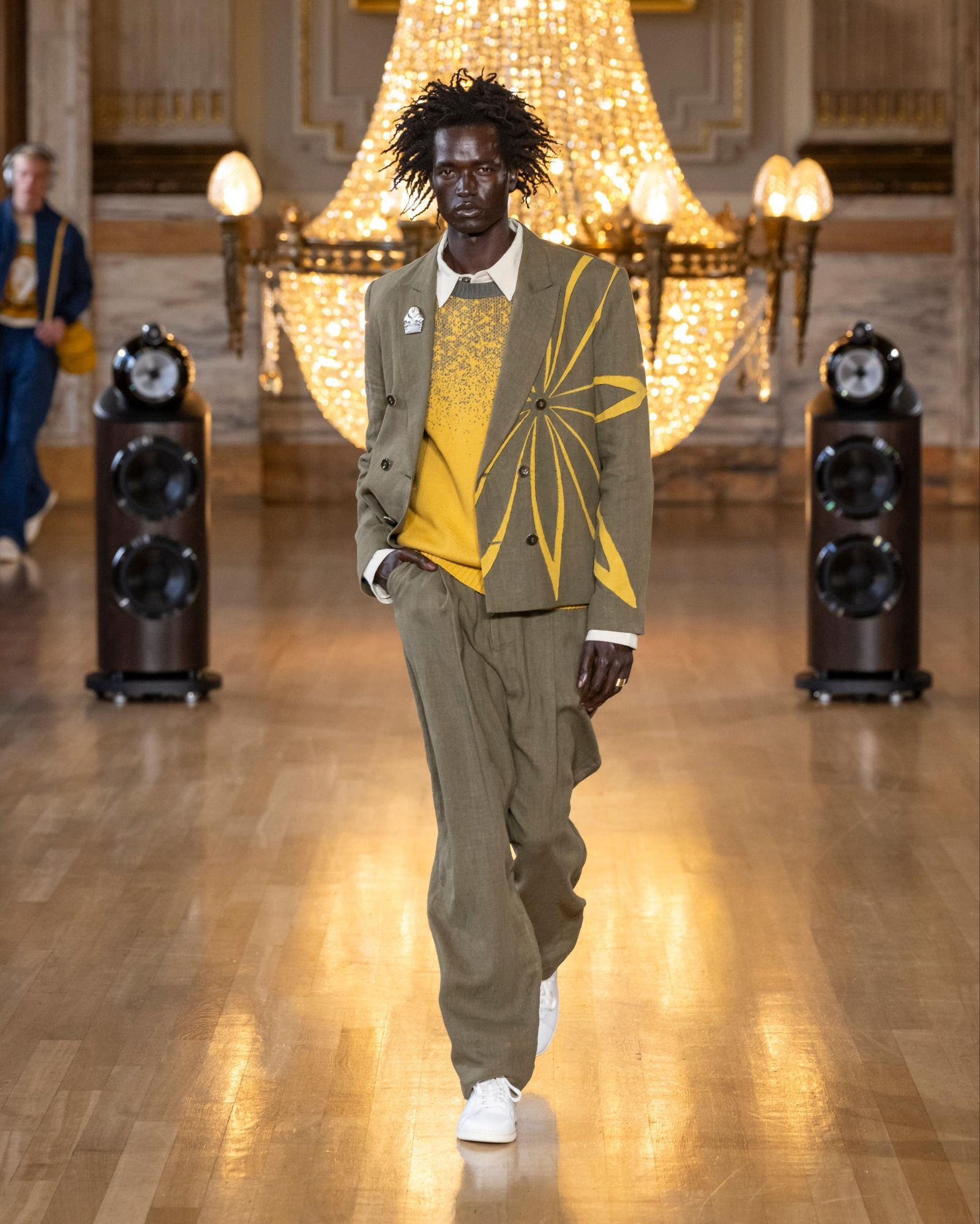
The collection draws inspiration from American painter Jacob Lawrence, particularly ‘The Shoemaker and The Seamstress‘ works that centre makers and the dignity of labour. That influence translated into a rich palette of burgundies, taupes, moss greens and other earthy tones, creating a visual warmth across the runway.
The colours worked particularly well against LABRUM’s tailoring, giving traditionally British silhouettes a more textured, expressive character. And that is where the collection’s central idea becomes particularly clear: British tailoring doesn’t disappear when it encounters another culture. It changes.
LABRUM x Adidas: culture in motion
The collection’s relationship with Adidas provided another contemporary interpretation of cultural exchange. The Olokun flower, a motif inspired by traditional Nigerian Adire indigo textiles, was reworked through the collaboration, bringing the symbol into the world of contemporary sportswear.
For SS27, LABRUM also introduced the Adidas Adizero EVO SL footwear and apparel collaboration on the runway, extending the collection’s craft narrative into everyday sport and street style. The collaboration is significant because it takes something rooted in textile and cultural history and places it within a global sportswear context.
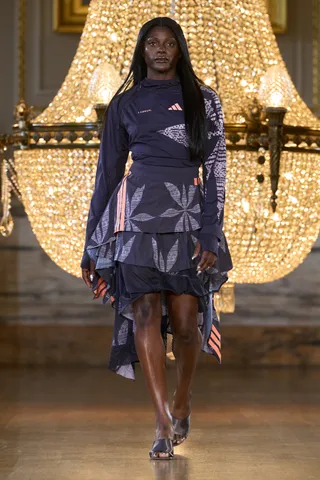
Credit: Labrum
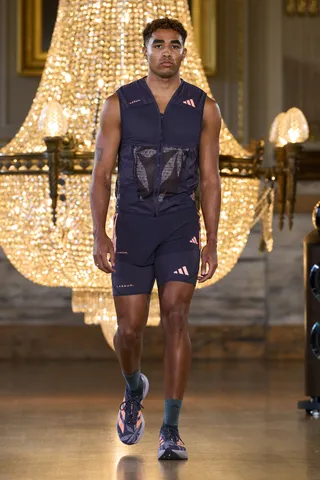
Credit: Labrum
The full Adidas collaboration is scheduled to be available from the 1st of October 2026.
When fashion becomes sound
As with the earlier chapters of the Osmosis trilogy, sound is an important part of the experience. For SS27, LABRUM worked with Sampha on the show’s soundscape and score, adding an aural dimension to the collection’s exploration of movement and cultural exchange.
The intention behind the score was to create a journey through different landscapes and temporalities, a fitting accompaniment to clothes whose references move between continents, generations, and traditions. The acoustic environment was further developed with Bowers & Wilkins, who created a bespoke version of its Px8 S2 headphones featuring LABRUM’s monogram fabric and an engraved LABRUM motif. So even the soundtrack wasn’t simply background music. It formed another layer of the collection’s narrative.
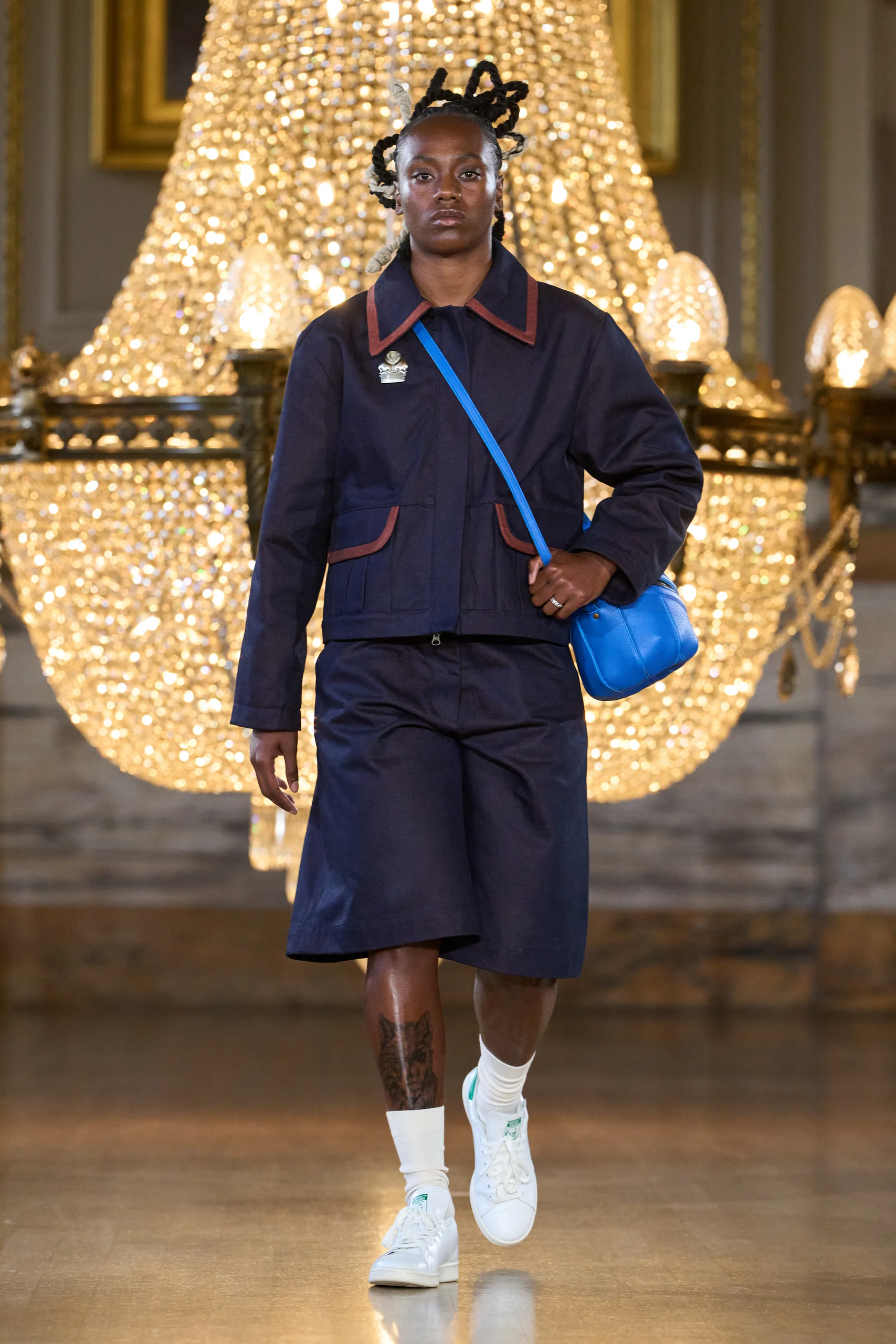
English Women’s Super League club Chelsea & France’s National Team
Seeing ‘Hands of Osmosis‘ on the runway
Watching the collection come together on the runway, the strongest impression was how naturally the different references coexisted. There was tailoring, sportswear, craft, embroidery, raffia, leather, eyewear and footwear, but the collection didn’t feel like a checklist of cultural references.
Instead, the pieces seemed connected by a shared understanding of making. That is perhaps the most successful aspect of ‘Hands of Osmosis’. Its subject isn’t simply West African culture, British culture, or the relationship between the two.
About the Author




Beautiful article on Osmosis the detailing on how you see the brand is very inspiring and informative thank you .
Thank you so much for the feedback and kind words.
I am glad you enjoyed this read.